
Surah Ar-Rahman in the Haram: Reflecting on Allah’s Blessings During Your Umrah
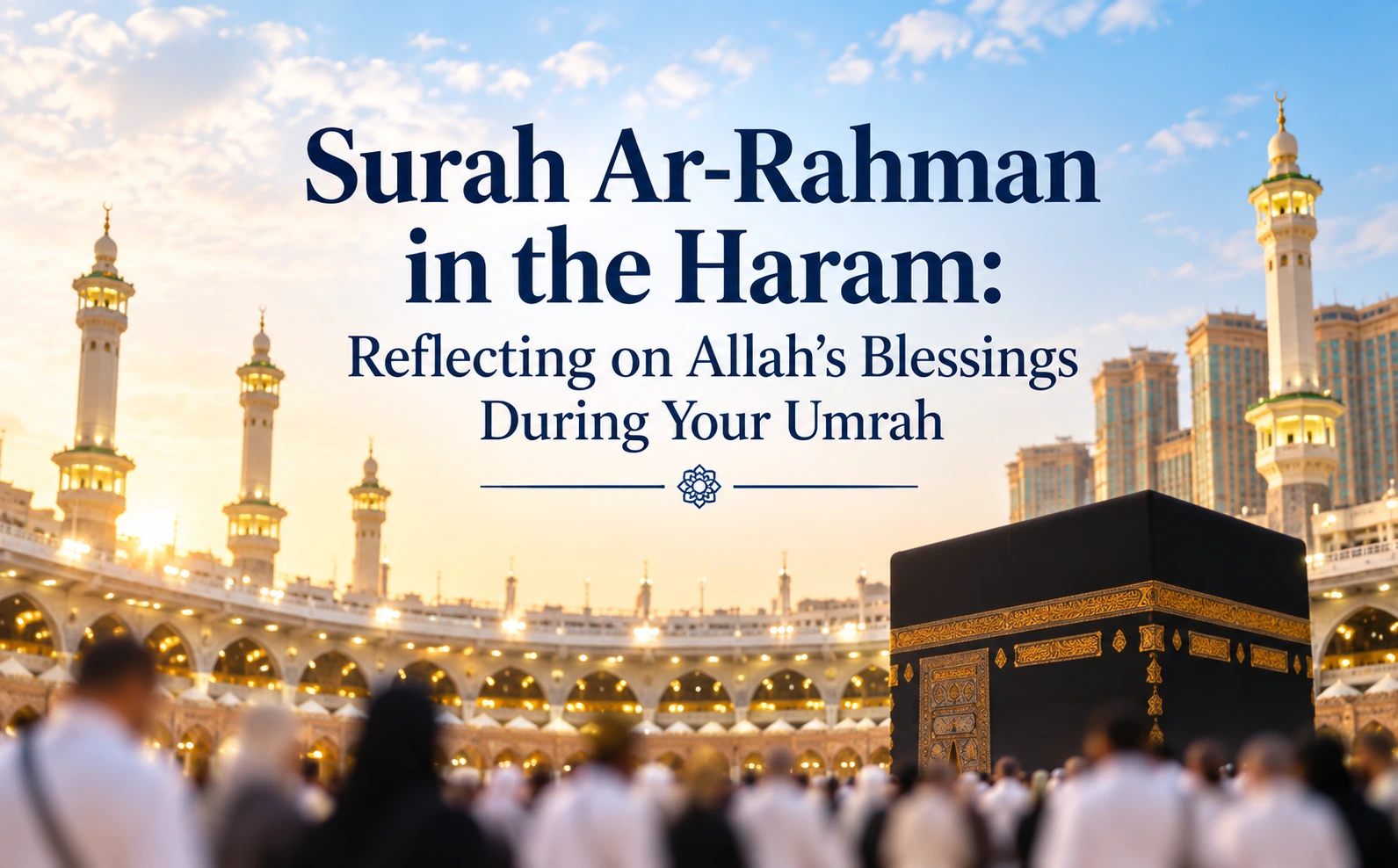
There’s a question that comes back again and again in Surah Ar-Rahman. After describing the sun and moon, the sky, the earth, the fruit and the seas, Allah asks which of the favours of your Lord you would deny. The question is repeated 31 times in the surah’s 78 verses. Read slowly, it has a way of making you stop and count your blessings, one by one.
Many pilgrims say that Umrah is when that question finally hits home. Sitting in the courtyard of the Grand Mosque with the Kaaba in front of you, it’s hard not to feel grateful just to be there. You don’t need a luxury trip to feel it, either. Even the cheapest umrah packages give you the most valuable thing of all: time near the House of Allah. This article looks at how Surah Ar-Rahman can shape your reflection during Umrah, and offers some practical tips for making the Quran part of your trip.
Quick answer: why read Surah Ar-Rahman during Umrah?
- Its repeated question invites you to reflect on Allah’s blessings, which suits the gratitude many pilgrims feel.
- It’s short enough to read in one sitting, even with a busy schedule.
- Its images of creation, water and mercy connect closely with what you see in Makkah and Madinah.
- Its rhythm makes it easy to listen to and memorise.
What is Surah Ar-Rahman about?
Surah Ar-Rahman, the 55th chapter of the Quran, takes its name from one of Allah’s names, the Most Merciful. It opens by reminding us that He taught the Quran, created human beings and taught them to speak clearly.
The surah then moves through the signs of Allah in creation: the sun and moon running on their set courses, the stars and trees bowing down, the sky raised high and the balance set in place. It speaks of the earth laid out for living things, of fruit, palm trees and grain, of two seas that meet but don’t mix, and of pearls and coral drawn from the water. It reminds us that everything on earth will pass away, and only the face of our Lord will remain. Finally, it describes the gardens promised to those who fear standing before their Lord.
Through it all runs the same refrain, asking people and jinn which of their Lord’s favours they would deny.
How does the surah connect with the journey?
Water
Surah Ar-Rahman speaks of the seas and the blessings that come from them. In Makkah, water has its own story. Zamzam, which began as a spring for Hajar and her baby Ismail, still flows today and is offered free to millions of pilgrims. Drinking it after Tawaf is a natural moment to remember that every drop is a gift.
Creation
The flight to Jeddah takes you over seas, deserts and mountains. The surah’s descriptions of the sky, the earth and the balance of creation can turn a long journey into a time for reflection rather than boredom.
Mercy
The surah begins with Ar-Rahman, the Most Merciful. Umrah is, for many, a chance to seek forgiveness and a fresh start. Reading about Allah’s mercy at the start of the trip sets the tone for the duas you’ll make at the Kaaba.
The passing of all things
The reminder that everything on earth will pass away feels especially real in the Haram, among people of every age and background, all dressed simply and equal before Allah.
Why is winter a good time for reading and reflection?
The season you choose can make a real difference to how much quiet time you get. UK December Umrah Packages are popular because the weather in Makkah is mild and families in Britain have time off over the winter break. The cooler days and long evenings make it easier to sit in the courtyard after Isha or before Fajr with your Quran, without the punishing heat of summer.
The week between Christmas and New Year is the busiest and most expensive, so if you can, travel in early or mid-December. The mosque is still busy but more comfortable, and you’ll find more space to sit and read.
Practical tips for reading the Quran during Umrah
- Make a simple plan. Pick a few surahs you want to read or listen to each day. Surah Ar-Rahman, Surah Yasin and Surah Al-Mulk are popular choices.
- Use the copies in the mosque. There are copies of the Quran on shelves throughout the Grand Mosque and the Prophet’s Mosque. Many pilgrims also use an app with a translation.
- Read the meaning too. If Arabic isn’t your first language, read an English or Urdu translation alongside, so the words reach your heart as well as your tongue.
- Listen to the imams. The recitation in the night prayers is beautiful. Many people find they understand a surah better after hearing it recited in the Haram.
- Choose quiet times. After Fajr and late at night are usually the calmest times to sit and read.
- Keep a small notebook. Write down verses that move you and duas you want to make.
Sharing it with your children
If you’re travelling as a family, Surah Ar-Rahman is a lovely surah to share with children. Its repeated question is easy for them to learn and join in with. Before the trip, read it together at home. Once you’re there, point out the blessings it mentions, from the water of Zamzam to the dates of Madinah, and let them answer the question in their own words.
Before you go: practical reminders
Make sure your passport has at least six months left from your arrival date, get your meningitis ACWY vaccination at least ten days before you travel, and book your Umrah permit on the official Nusuk app. Book with a licensed UK travel firm with ATOL protection, and pack a small pocket Quran or download a trusted Quran app before you leave.
Frequently asked questions
How many times is the refrain repeated in Surah Ar-Rahman?
The question about denying the favours of your Lord is repeated 31 times in the surah’s 78 verses.
Is there a special surah to read during Umrah?
There’s no single required surah. Pilgrims read whatever they can, and many choose surahs like Ar-Rahman, Yasin and Al-Mulk for reflection.
Are Quran copies available in the Grand Mosque?
Yes. Copies are kept on shelves throughout the mosque for anyone to use.
When is the quietest time to read in the Haram?
Usually after the Fajr prayer and late at night.
Key takeaways
- Surah Ar-Rahman’s repeated question encourages gratitude, which fits the spirit of Umrah.
- Its themes of water, creation and mercy connect with what pilgrims see and feel in Makkah.
- Winter trips offer cooler days and longer evenings for reading.
- A simple daily Quran plan helps you make the most of your time.
When you come home, the noise of everyday life will return quickly. But the next time you hear Surah Ar-Rahman recited, you may find yourself back in that courtyard, looking at the Kaaba, quietly answering its question: none of Your favours, our Lord, do we deny.