Your First Umrah from the UK: A Practical and Spiritual Guide for Pilgrims
For a British Muslim, few moments compare with the day you finally decide to perform Umrah. It is a journey the heart has often made long before the body sets off, shaped by years of prayer, of reciting the Qur’an, and of quietly longing to stand before the Kaaba. Yet a first Umrah can also feel daunting. There are flights to arrange, documents to gather, rites to learn and an unfamiliar country to find your way around. This guide is written to make that first journey easier, walking you through both the practical steps and the spiritual heart of the pilgrimage.
For most people, the journey begins with a booking. Rather than piecing together flights, hotels and transfers alone, the great majority of first-timers choose Umrah Packages from UK that bundle everything into a single arrangement, the visa included. This takes the stress out of the logistics and, just as importantly, frees your mind for what truly matters: preparing your heart, learning the rites, and arriving ready to worship rather than worrying about a missed connection. Once the booking is made, the real preparation can begin in earnest.
Getting the paperwork right
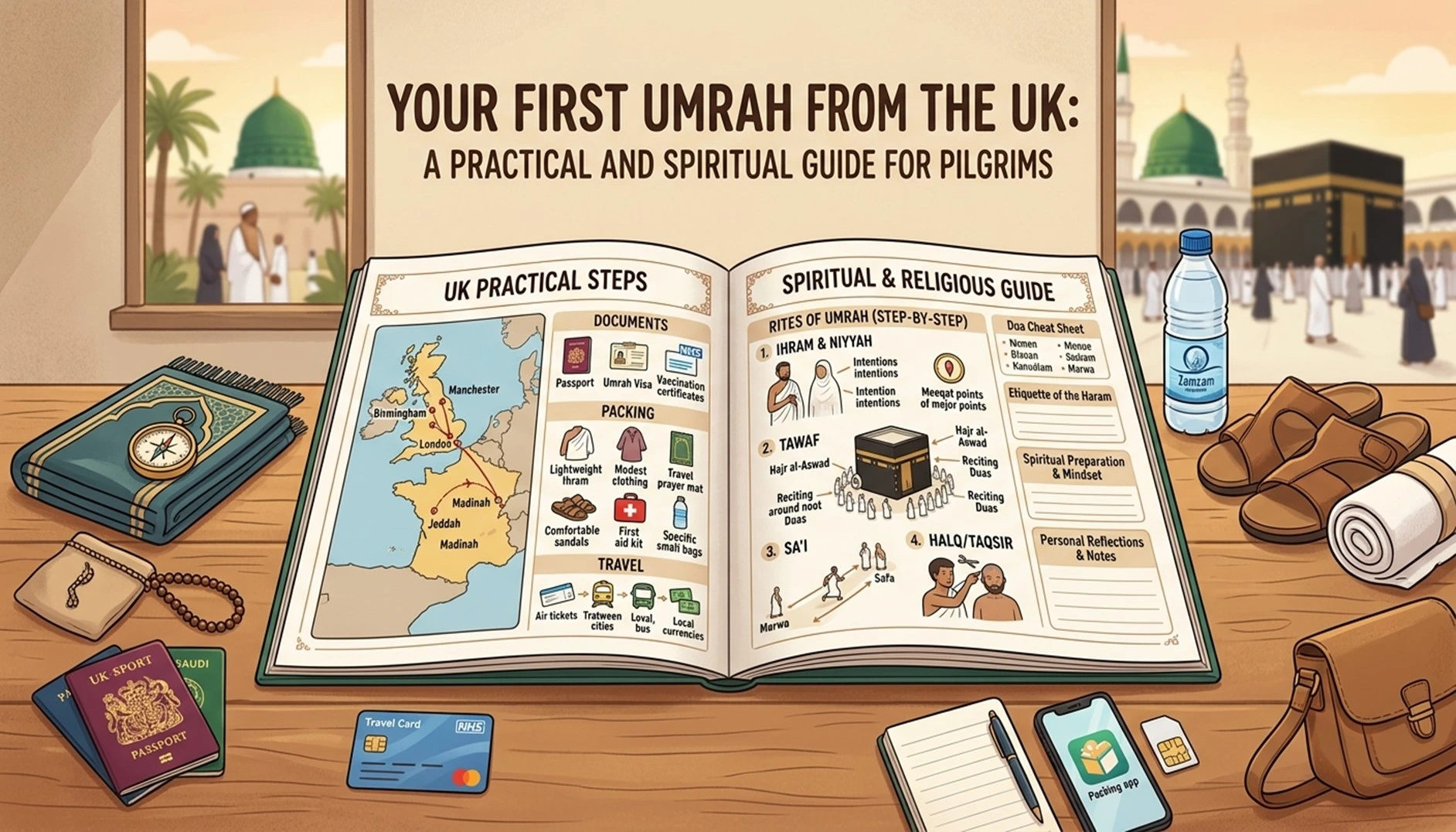
Before you travel, a handful of essentials must be in order, and it is worth checking them early. Your passport should be valid for at least six months from the date you enter Saudi Arabia, and you will need a meningitis (ACWY) vaccination certificate, which the Saudi authorities and most agencies require. The Umrah Visa itself is usually arranged for you as part of your package, though it is also possible to perform Umrah on the Saudi tourist e-visa outside the Hajj season. Whichever route you take, you now book your Umrah slot and obtain your permit through the official Nusuk app before entering the Grand Mosque. Sorting these details out weeks in advance spares you any last-minute panic and lets you turn your full attention to the journey ahead.
What to expect when you arrive
Most UK flights land in Jeddah or Madinah, where your transfer will carry you on to your hotel. Nothing quite prepares you for the first time you enter Masjid al-Haram and see the Kaaba with your own eyes. Many pilgrims describe being overcome in that instant, their years of prayer suddenly made real before them. Take your time. There is no need to push through the crowds or rush the moment. Steady yourself, raise your hands in dua, and let the sight settle in your heart before you begin. First impressions of Madinah, with the calm of the Prophet’s Mosque, are gentler but no less moving.
Performing the rites
Umrah follows a clear order that is worth learning before you leave home. You enter the state of Ihram at the appointed point, reciting the Talbiyah, then perform Tawaf, seven circuits around the Kaaba, followed by two rak’ahs of prayer near Maqam Ibrahim and Sa’i, the seven walks between the hills of Safa and Marwah. Finally you shave or trim your hair, which brings you out of Ihram and completes the Umrah. The rituals themselves take only a few hours, yet their meaning runs deep. Study the sequence in advance, and take the finer points of the rulings from a qualified scholar of your school, so that you move through each step with calm and confidence rather than confusion.
Bring the Qur’an with you
There is no companion on this journey quite like the Qur’an. To recite within sight of the Kaaba, or in the Prophet’s Mosque, is a gift few pilgrims ever forget. Carrying a few surahs in your heart, and understanding their meaning, deepens every prayer you offer there. Surah Rahman, with its unforgettable refrain, “So which of your Lord’s blessings will you deny?”, takes on a new weight when you recite it in the very place that fills the heart with gratitude for all that Allah has given. The weeks before departure are an ideal time to strengthen your recitation, refresh your Tajweed and reconnect with the Book, so that your tongue and your heart move together once you arrive.
The spiritual heart of the journey
Above all, Umrah is an act of the heart. Renew your intention so that the journey is for Allah alone, not for status or for show. Make sincere repentance before you leave, settle your debts, and seek to mend any disputes so that you travel with a clean slate. The hours at the Haram are precious, so fill them with dua, with dhikr, and with quiet reflection on Allah’s endless mercy. Ask for yourself, for your parents, for your family and for the wider Ummah. Many pilgrims say the stillness they find in those days stays with them for years after they return home, a light they carry back into ordinary life.
Practical tips for UK pilgrims
A few simple habits make the whole trip smoother. Pack light and bring comfortable footwear, for you will walk a great deal. Drink plenty of water and Zamzam, and rest between acts of worship, especially if you are travelling with children or elderly relatives. Be patient in the crowds and gentle with your fellow pilgrims, for a smile and a kind word are part of the worship itself. If your dates are flexible, the quieter months outside Ramadan and the UK school holidays bring smaller crowds and lower prices. Carry a small bag for your essentials at the Haram, keep your hotel details on you, and leave a little room in your case for Zamzam and gifts to bring home.
A journey to treasure
Your first Umrah is a milestone you will remember for the rest of your life. Prepare the paperwork early, choose a trustworthy agency, learn the rites, and above all ready your heart. The flight will carry your body to Makkah, but it is faith, gratitude and the words of the Qur’an that carry your soul. Approach the journey with sincerity and patience, and it will reward you far beyond the days you spend there. May Allah accept the Umrah of every pilgrim who sets out with a sincere heart.
Common questions about your first Umrah
What do I need to arrange before my first Umrah?
You need a passport valid for at least six months, a meningitis (ACWY) vaccination certificate, your visa, and an Umrah permit booked through the Nusuk app. Booking a package handles most of this for you, including flights and hotels.
Do I need a separate visa for Umrah?
An Umrah visa is usually arranged as part of your package. Alternatively, you may perform Umrah on the Saudi tourist e-visa outside the Hajj season. In both cases you now need a permit from the Nusuk app to perform Umrah.
How long does Umrah take?
The rites themselves take only a few hours, but most UK pilgrims stay seven to ten days. This allows time to pray in both Makkah and Madinah, rest, and visit the holy sites without rushing.
When is the best time for a first Umrah?
Umrah can be performed for most of the year, outside the short pause around the Hajj season. Quieter, cheaper months fall outside Ramadan and the school holidays, when the weather is often milder and the crowds thinner